
The door groans halfway up, jerks, then thuds against the floor a little harder than it used to. You tell yourself you’ll deal with it later — until the morning it stops halfway and won’t budge with the car already running. That slow decline almost never fixes itself, but it is highly preventable. A scheduled garage door tune-up service catches the small problems while they are still small, and below we walk you through exactly what a professional visit looks like so you know precisely what you’re paying for.
At CallOrange Garage Door Repair, we’ve serviced thousands of doors across the Valley since 2008, and the pattern is remarkably consistent: the doors that get a regular tune-up rarely become the emergency calls. We want to show you why that is, what our technicians actually do during a visit, and how to tell when your own door is overdue. You can also find our Tempe location on Google Maps if you’d like to confirm our service area before reading on.
What a Garage Door Tune-Up Service Actually Includes
A professional garage door tune-up service is a structured, multi-point inspection and adjustment of every moving and load-bearing component of your door system — not a quick spray of lubricant and a wave goodbye. The goal is to restore the door to factory-smooth operation, correct the wear that has crept in since the last visit, and flag any part that is approaching the end of its service life before it fails.
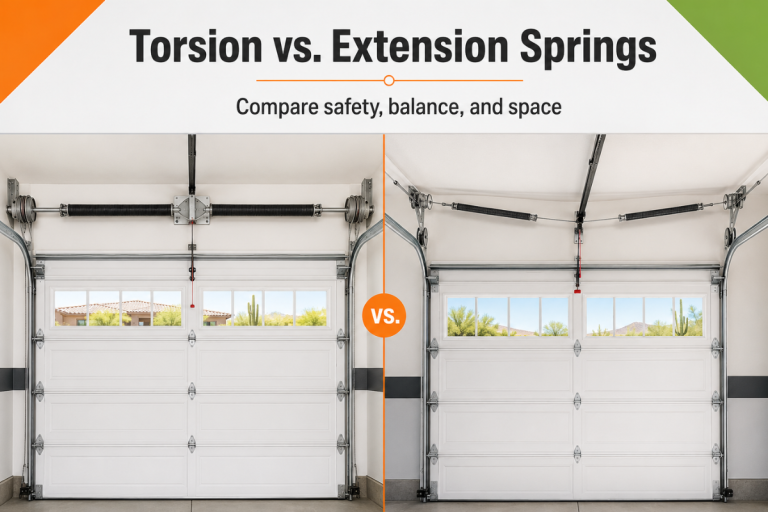
A complete tune-up covers four interconnected systems that all have to work together: the counterbalance system (springs, cables, and drums), the guidance system (rollers, hinges, and tracks), the drive system (the opener motor, rail, and logic board), and the safety system (photo-eye sensors and auto-reverse). When any one of these drifts out of specification, it quietly overloads the others. A door with a fatigued spring, for example, forces the opener to lift more weight than it was rated for, which shortens the motor’s life and strains the rail.
Our team treats every visit as a diagnostic appointment first and an adjustment second. We’ve published a full breakdown of our professional garage door services so you can see how a routine tune-up connects to repairs like torsion spring replacement or track realignment when they’re needed.
The Core Checklist
Every CallOrange tune-up follows the same baseline checklist before any door-specific work begins:
- Balance test — disconnecting the opener and lifting the door by hand to confirm the springs are carrying the weight correctly.
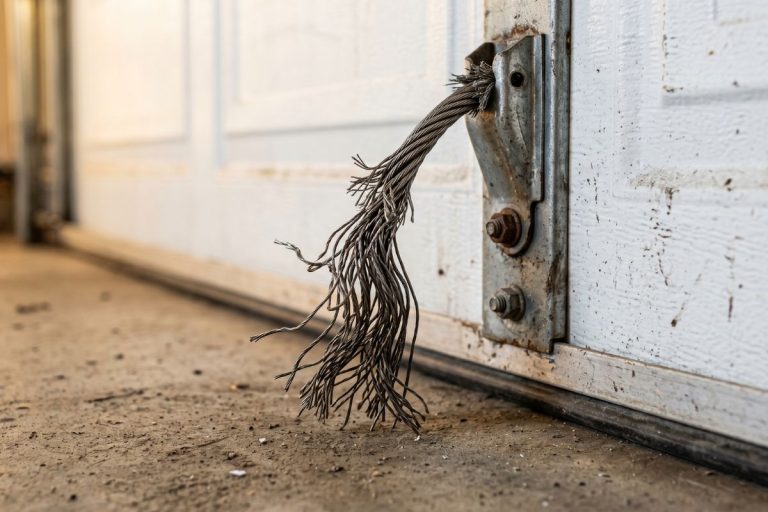
- Spring and cable inspection — checking torsion springs for fatigue, rust, and gaps, and cables for fraying.
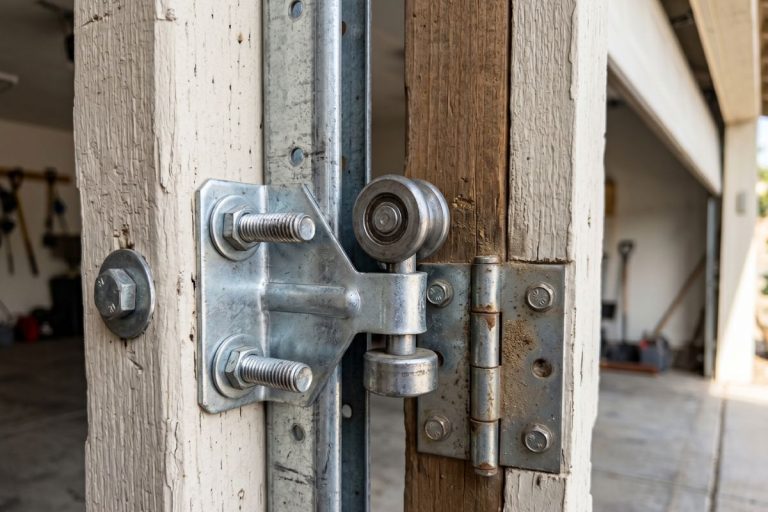
- Roller and hinge check — examining rollers for flat spots, cracked nylon, or worn bearings.
- Track alignment — verifying tracks are plumb, level, and free of dents.
- Hardware tightening — torquing every bolt, bracket, and lag screw that vibration has loosened.
- Lubrication — applying the correct lubricant to springs, rollers, hinges, and the opener rail.
- Opener and safety test — running the opener through a full cycle and testing the auto-reverse and photo-eyes.
What a Professional Tune-Up Covers — and Why It Matters
| Tune-Up Step | What We Do | Why It Protects You |
|---|---|---|
| Balance Test | Disconnect opener & lift door by hand | Confirms springs carry the weight, not your motor |
| Spring & Cable Check | Inspect torsion springs and cables for wear | Prevents sudden, dangerous spring failure |
| Roller & Hinge Inspection | Examine for flat spots, cracks, worn bearings | Stops grinding and binding before it spreads |
| Track Alignment | Verify tracks are plumb, level, and dent-free | Keeps the door from jamming or coming off track |
| Hardware Tightening | Re-torque every bolt, bracket, and lag screw | Reverses the loosening caused by daily vibration |
| Lubrication | Apply correct lubricant to all moving parts | Restores quiet operation; fights Arizona heat & dust |
| Opener Calibration | Reset travel limits and force settings | Door seals fully and stops at the right points |
| Safety System Test | Test auto-reverse and photo-eye sensors | Ensures the door reverses for people, pets, and cars |
| Panel & Weather Seal Check | Inspect panels and bottom seal condition | Protects curb appeal, security, and energy efficiency |
Why Garage Doors Drift Out of Tune
Understanding why a door declines helps you see why preventive service pays for itself. A residential garage door is the largest and heaviest moving object in most homes, and in the Phoenix metro it operates under conditions that accelerate wear far beyond the national average.
The Cycle Count Problem
Garage door springs are rated in cycles — one cycle equals one full open and one full close. A standard torsion spring is rated for roughly 10,000 cycles. That sounds like a lot until you count real usage: a busy family opening and closing the door four to six times a day will burn through that rating in four to seven years. Once a spring passes its cycle life, it doesn’t fail politely — it snaps, often with a bang loud enough to be mistaken for a gunshot, and the door becomes dangerously heavy in an instant.
Arizona Heat, Dust, and Thermal Cycling
Tempe summers are punishing on garage hardware. Daytime temperatures inside an attached garage routinely climb past 120°F, and that heat thins out factory grease, bakes the nylon on rollers, and expands and contracts metal components every single day. Fine desert dust then settles into the dried-out bearings and tracks, acting like a grinding paste. This combination is exactly why our roller replacement and track service requests spike every summer. Regular lubrication during a tune-up is the single most effective defense against this regional wear pattern.
Vibration and Settling
Every cycle sends a small shudder through the door’s hardware. Over hundreds of cycles, that vibration backs out lag screws, loosens hinge bolts, and lets brackets shift. A loose track bracket lets the track drift out of alignment, which makes the rollers bind, which makes the opener work harder — a cascade that starts with a single quarter-turn of play in one bolt. Catching and re-torquing that hardware is routine during a tune-up and prevents the cascade entirely.
Why DIY Often Misses the Real Problem
Homeowners frequently lubricate the noisy parts and consider the job done, but noise is a symptom, not the cause. The grinding sound may be coming from a roller, but the reason the roller is failing might be a track that’s a sixteenth of an inch out of plumb, or a spring that’s no longer balancing the load. Diagnosing the root cause is what separates a professional garage door tune-up service from a weekend spray-down. Our certified technicians are trained to trace symptoms back to their source.
⚠️ Safety Warning: High-Tension Springs & Electrical Hazards
Garage door torsion springs are wound under extreme tension — enough stored energy to cause severe injury or death if a spring, cable, or winding bar slips during adjustment. Opener units also connect to 120V AC household wiring. Never attempt to adjust, wind, or replace springs, cables, or opener wiring yourself. The U.S. Consumer Product Safety Commission (CPSC) links thousands of garage door injuries each year to spring failures and improper repairs. Always hire a licensed, insured garage door technician for spring, cable, or electrical work. Every CallOrange technician is licensed, insured, and trained to handle these components safely.
Our Step-by-Step Professional Tune-Up Process
When you book a tune-up with our team, here is exactly what happens from the moment we arrive. Transparency is part of how we work — you’re welcome to watch every step.
Step 1 — Visual and Operational Assessment
We begin by running the door through a normal cycle while it’s still connected to the opener, listening and watching for hesitation, grinding, jerking, or uneven movement. This shows us how the system behaves under power before we start isolating components.
Step 2 — Manual Balance Test
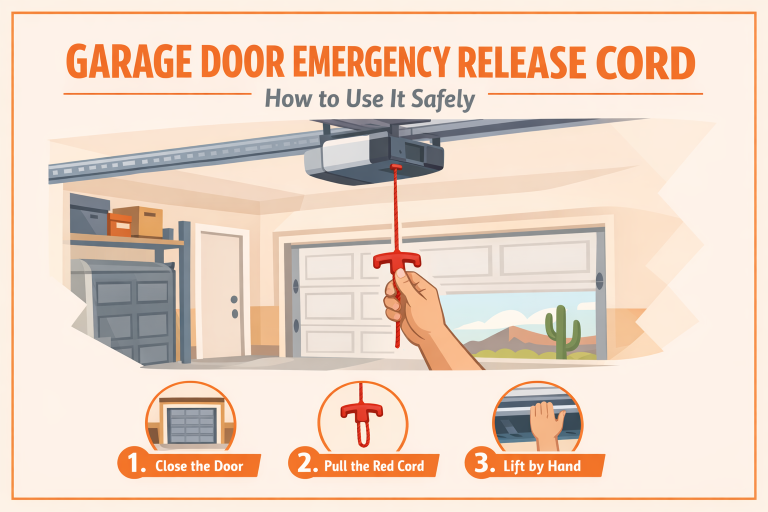
We disconnect the opener using the emergency release and lift the door by hand to roughly waist height. A properly balanced door will hold its position; a door that slams down or shoots up is telling us the torsion springs are out of adjustment or losing tension. This test is the heart of any honest tune-up.
Step 3 — Hardware and Component Inspection
We inspect the springs, cables, drums, rollers, hinges, brackets, and tracks one by one. We also check the door panels themselves for cracks, separation, or stress fractures that can signal a deeper structural issue and may call for panel replacement.
Step 4 — Adjustment and Tightening
We re-torque all hardware to specification, adjust the track alignment, fine-tune spring tension when it’s within safe limits, and reset the opener’s travel and force settings so the door stops and seals correctly at both ends of its travel.
Step 5 — Lubrication
We apply a lithium-based or silicone lubricant — never WD-40, which is a solvent that strips grease rather than providing it — to the springs, bearings, rollers, hinges, and opener rail. This is what restores that quiet, smooth glide.
Step 6 — Safety System Verification
Finally, we test the federally mandated safety features: the auto-reverse mechanism (the door must reverse when it contacts an object) and the photo-eye sensors near the floor. A tune-up that skips this step isn’t complete. If your opener is older than the 1993 safety standard, we’ll tell you honestly and explain your options.
Professional Tune-Up vs. DIY Maintenance
There’s real value in homeowner maintenance, and we encourage it — keeping tracks clear and listening for new noises genuinely helps. But there’s a clear line between what’s safe to do yourself and what requires a trained, insured technician with the right tools.
Light maintenance you can safely handle includes wiping down the tracks, visually checking the cables for obvious fraying, testing the auto-reverse by laying a block of wood in the door’s path, and lubricating the rollers and hinges with a proper garage door lubricant. What you should never attempt is adjusting or replacing torsion springs, repairing cables, or modifying the spring tension — these components store enormous mechanical energy and are responsible for the most severe garage door injuries every year.
Brand matters here, too. Modern openers from LiftMaster, Chamberlain, and Genie each have proprietary force-adjustment procedures, travel-limit settings, and diagnostic codes. A LiftMaster with myQ connectivity, for instance, behaves differently from an older chain-drive Genie, and resetting the limits incorrectly can leave the door failing to close or reversing for no reason. Our technicians work across all major brands daily, which is why we can tune a modern smart opener as confidently as a twenty-year-old unit. If you’ve been weighing a newer connected model, our guide to garage door home automation explains how smart home integration ties into opener maintenance.
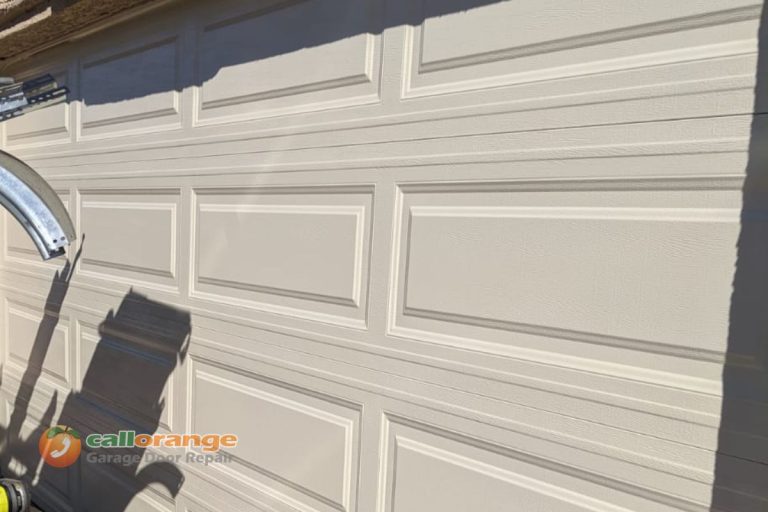
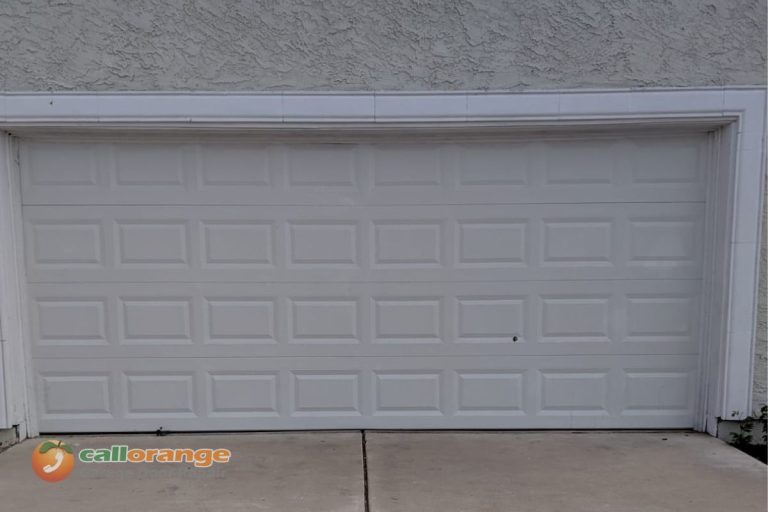
A professional garage door tune-up service also protects more than the mechanics. A door that opens evenly and seals tightly supports your home’s curb appeal, reinforces your home security by closing and latching reliably every time, and — with a properly weather-sealed door — helps your garage hold temperature, which matters more if you’ve invested in insulated garage doors.
How Often Should You Schedule a Tune-Up?
For most Tempe households, we recommend a professional tune-up once a year. Homes with heavy daily use — multiple drivers, a door that doubles as the main entry, or a household running several cycles a day — benefit from a twice-yearly schedule, ideally once before the brutal summer heat sets in and once after.
Beyond the calendar, your door will tell you when it needs attention. Schedule a visit promptly if you notice any of the following: the door has become noticeably louder, it moves unevenly or jerks during travel, it sags or hangs crooked when partway open, the opener struggles or strains, or you hear a loud bang from the garage (a classic sign of a snapped spring). Any of these is worth a call to our service team rather than a wait-and-see approach.
A consistent maintenance rhythm is also the cheapest insurance you can buy for the system. The cost of an annual tune-up is a small fraction of an emergency spring or panel repair, and a far smaller fraction than replacing an opener motor that burned out lifting an unbalanced door. We keep maintenance histories for our regular clients so we can predict component wear and replace parts on your schedule, not on the door’s worst possible day. You’ll find more seasonal care tips on our blog.
Frequently Asked Questions — Garage Door Tune-Up Service
How long does a professional garage door tune-up take?
A standard residential tune-up takes about 45 minutes to an hour for a single door. If our technician finds a component that needs repair — such as a worn torsion spring or a damaged roller — we’ll explain the issue and the cost before doing any extra work. The inspection and adjustment themselves are quick; we never rush the safety tests.
How often should I schedule a garage door tune-up service in Tempe?
Once a year is right for most homes. Households with heavy daily use should consider twice a year — once before summer and once after — because Arizona heat and dust accelerate wear on rollers, bearings, and lubricant. If your door has gotten louder or rougher, don’t wait for the schedule; book a visit sooner.
Can I do a garage door tune-up myself?
You can safely handle light maintenance — wiping tracks, lubricating rollers and hinges, and testing the auto-reverse with a block of wood. What you should never attempt is adjusting or replacing torsion springs, repairing cables, or modifying spring tension. Those components store enormous energy and cause the most serious garage door injuries each year. Leave them to a trained, insured technician.
What are the warning signs my garage door needs a tune-up?
Watch for increased noise, jerky or uneven movement, the door sagging when partway open, the opener straining, or a loud bang from the garage (often a snapped spring). Any of these means it’s time to call our service team for an inspection before a small issue becomes an emergency.
Does a tune-up work on smart openers like LiftMaster myQ?
Yes. Our technicians service all major brands — LiftMaster, Chamberlain, and Genie — including modern Wi-Fi connected models. A tune-up on a smart opener also includes verifying travel limits and force settings so the unit reports door status correctly. If you’re interested in upgrading, our guide to garage door home automation covers smart home integration in detail.
Is a garage door tune-up worth the cost?
Almost always. The cost of an annual tune-up is a small fraction of an emergency spring repair or a burned-out opener motor, and it extends the life of every component on the door. Preventive service is the cheapest insurance you can buy for the heaviest moving part of your home. Find us on Google Maps or call to schedule.
Keep the Heaviest Door in Your Home Working Like New
A garage door is easy to take for granted right up until the morning it traps your car inside — and almost every one of those mornings was preventable. A regular garage door tune-up service is the quiet, unglamorous habit that keeps the largest moving part of your home safe, quiet, and dependable through Arizona’s hardest seasons. It protects your home security, preserves your curb appeal, and spares you the cost and stress of an emergency repair on the worst possible day.
At CallOrange Garage Door Repair, every tune-up is performed by background-checked, factory-trained technicians who service LiftMaster, Chamberlain, and Genie systems across Tempe and the greater Phoenix area. We bring the same care to a routine maintenance visit as we do to a full torsion spring replacement or panel repair — because we’d rather catch the small problem today than rescue you from the big one next month.
If your door has been louder, slower, or rougher than it used to be, don’t wait for it to quit. Call us at (480) 690-3344, available Monday through Sunday, 7 AM to 11 PM, with 24/7 emergency dispatch. You can schedule your tune-up online in under a minute, or visit our Tempe service location on Google Maps at 2101 E Broadway Rd, Suite 3, to see where we’re based. Your garage door does heavy work every single day — let our team keep it running like the day it was installed.