
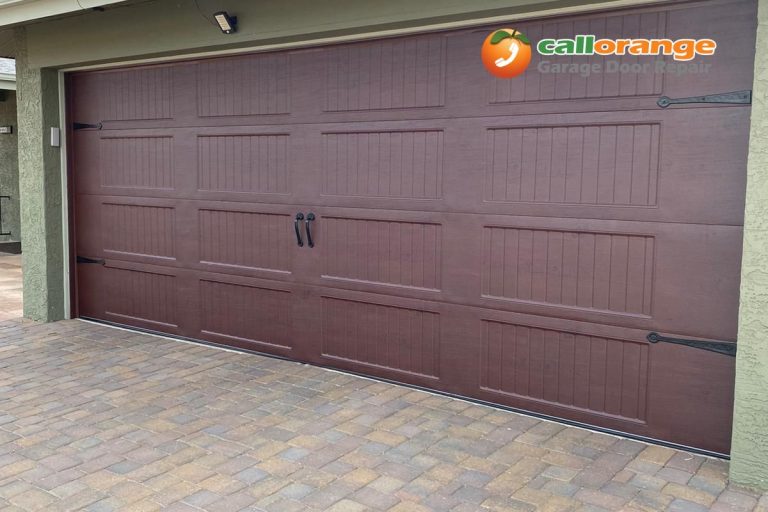
Garage door keypad blinking

Garage door keypad blinking: 5 Causes and Quick Fixes

Garage Door Keypad Blinking: What It Means and How to Fix It

A blinking garage door keypad is one of the more common service calls we receive at CallOrange Garage Door Repair in Phoenix. The blinking light is your keypad’s way of signaling that something needs attention, and in most cases, the fix takes only a few minutes. This guide walks you through the most likely causes and the steps you can take before calling a technician.

Why Is Your Garage Door Keypad Blinking?

Keypad manufacturers use blinking patterns to communicate specific error states. The number of blinks, the color of the light, and whether the blink is continuous or intermittent all point to different problems. Before you assume the keypad is faulty, work through the following common causes in order from simplest to more involved.

Keypad Blinking Causes: Quick Diagnosis Guide

Cause Blink Pattern Fix Time to Resolve
Low or dead battery Slow or intermittent blink Replace battery with fresh unit 2 to 5 minutes
Lock-out mode Continuous rapid blink Wait 30 to 60 seconds, re-enter correct PIN 1 to 2 minutes
Lost programming Blinks but door does not move Reprogram via Learn button on motor unit 5 to 10 minutes
Signal interference Blinks intermittently, door response inconsistent Reposition keypad or add antenna extension 10 to 20 minutes
Faulty hardware Irregular or random blink pattern Replace keypad unit 30 to 60 minutes

Low or Dead Batteries

Weak batteries account for the majority of keypad blinking issues. Most keypads run on a single 9-volt battery or two AA batteries. When voltage drops below the operating threshold, the keypad blinks to signal that it cannot hold a stable connection with your opener’s receiver.

  • Open the keypad cover and remove the existing battery.
  • Install a fresh battery from a new pack, not one pulled from another device.
  • Test the keypad by entering your PIN and observing whether the blinking stops.

In Phoenix’s summer heat, battery drain accelerates faster than in milder climates. Temperatures inside a garage can reach 120°F or higher in August, which shortens battery life by 30 to 50 percent compared to manufacturer estimates. Replacing keypad batteries every six months keeps this problem from catching you off guard.

PIN or Lock-Out Mode Activation

Many keypads enter a temporary lock-out mode after a set number of incorrect PIN entries, typically three to five attempts. During lock-out, the keypad blinks continuously and ignores all input for 30 to 60 seconds. This is a built-in security feature.

If you or someone in your household entered the wrong code multiple times, simply wait out the lock-out period and then try again with the correct PIN. If you have forgotten your PIN, you will need to reprogram the keypad using the “Learn” button on your garage door opener motor unit.

Signal or Programming Issues

A keypad that blinks but does not trigger the door may have lost its programming connection with the opener. This can happen after a power outage, after replacing the opener’s backup battery, or after another remote or keypad was programmed using the same Learn button sequence.

How to Reprogram Your Keypad

  • Locate the “Learn” button on your opener’s motor head. It is usually colored orange, purple, or yellow depending on the brand.
  • Press and release the Learn button. The indicator light on the motor unit will illuminate for about 30 seconds.
  • Within those 30 seconds, enter your desired PIN on the keypad and press the Enter or Send button.
  • The opener should click or the lights should flash to confirm the new code has been accepted.
  • Test the keypad twice to confirm the door opens and closes reliably.

If the keypad still blinks after reprogramming, interference from nearby electronics or a neighboring opener operating on the same frequency may be disrupting the signal. Repositioning the keypad slightly or installing an external antenna extension on the motor unit often resolves frequency-based interference.

Faulty Keypad Hardware

Keypads exposed to Phoenix’s extreme summer heat and UV radiation degrade faster than average. Plastic housings crack, membrane keypads delaminate, and internal circuit boards can warp over time. If your keypad blinks in an irregular pattern that does not match any standard lock-out or low-battery sequence, the unit itself may be failing.

Signs that the keypad needs replacement rather than troubleshooting include buttons that register inconsistently, a cracked or discolored housing, moisture visible behind the lens, and blinking patterns that appear random. Replacement keypads are available for most major opener brands including LiftMaster, Chamberlain, Genie, and Linear, and installation typically takes under 20 minutes.

When to Call a Technician in Phoenix

A blinking keypad sometimes signals an issue with the opener itself rather than the keypad. If you have replaced the battery, confirmed the PIN, and reprogrammed the unit without success, the problem may lie with the opener’s logic board or receiver module. At that point, a technician can test signal strength, inspect wiring connections, and determine whether a component on the opener needs attention.

CallOrange Garage Door Repair serves homeowners across the Phoenix metro area. Our technicians carry replacement keypads and opener components on every service vehicle, which allows most repairs to be completed in a single visit.

Get Your Keypad Working Again Today

If your garage door keypad is still blinking after working through the steps above, the team at CallOrange Garage Door Repair is ready to help. We hold a 4.9-star rating across 48 Google reviews, and we schedule service calls for homes throughout Phoenix and the surrounding communities.

Frequently Asked Questions

How do I know if my garage door keypad needs to be replaced or just reprogrammed?

If your keypad blinks in a pattern that matches a known error state, such as low battery or lock-out mode, troubleshooting and reprogramming will usually resolve it. If buttons respond inconsistently, the housing is cracked or discolored, or the blinking appears random and does not stop after fresh batteries and reprogramming, the unit has likely reached the end of its service life and needs replacement. A technician can confirm this with a quick inspection.

Will a power outage permanently erase my garage door keypad’s PIN?

Most modern garage door openers store programmed codes in non-volatile memory, so a brief power outage will not erase your PIN. However, a longer outage combined with a depleted backup battery on the opener can sometimes reset stored codes. If your keypad stops working after a power event, run through the reprogramming steps using the Learn button on your motor unit before assuming anything is damaged.

Can extreme heat in Phoenix permanently damage a garage door keypad?

Prolonged exposure to Phoenix summer temperatures can warp the internal circuit board, delaminate membrane buttons, and cause the plastic housing to crack or discolor. UV radiation adds to this wear by degrading the outer casing over time. Keypads installed in direct sunlight tend to fail sooner than those mounted in shaded locations, so positioning matters when you install or replace a unit.

How often should I replace the batteries in my garage door keypad if I live in a hot climate?

In Phoenix and similar climates, replacing keypad batteries every six months is a reliable schedule because high temperatures accelerate voltage loss significantly. Setting a recurring reminder at the start and end of summer aligns the replacement schedule with the periods of heaviest heat exposure. Using name-brand batteries from a fresh pack, rather than batteries pulled from other devices, also extends the time between replacements.

What should I do if my garage door keypad still blinks after I have tried all the basic troubleshooting steps?

If fresh batteries, a lock-out wait period, and a full reprogramming sequence have not stopped the blinking, the most likely remaining causes are radio frequency interference from nearby electronics or a hardware fault in the keypad itself. You can try repositioning the keypad a few inches or asking your technician to install an antenna extension on the motor unit to improve signal reception. If neither step resolves the issue, contact CallOrange Garage Door Repair for an on-site diagnosis.

Call us at (480) 690-3344 or visit callorange-garage-repair.com to book your appointment. We will diagnose the issue and restore your keypad to full operation so you can get back to your day.

Insulated vs. Non-Insulated Garage Doors: The Real Difference

Every garage door decision comes down to one fundamental question: are you paying for a panel that keeps things out, or one that actively works for your home? Most homeowners in Tempe replace a garage door once every fifteen to twenty years, so when the moment arrives, it carries real weight. You can drive through any neighborhood off Broadway Road or Warner Drive and see two kinds of doors sitting side by side — one that feels solid when you tap it, and one that rings hollow. That difference is not cosmetic. It determines how your garage handles 115°F summer heat, how much noise bleeds through into your living space, how well your panels survive monsoon season, and what the upgrade ultimately does to your home’s value at resale.

At CallOrange Garage Door Repair, we have been helping Tempe, Mesa, and Phoenix homeowners make this exact decision since 2008. The answer is almost never as simple as “pick the cheaper one.” This guide breaks down how these two door types are built, where each performs best, and which choice delivers the strongest long-term return for your specific situation.

What Are Insulated Garage Doors? A Real Comparison for Arizona Homeowners

Insulated garage doors are constructed with one or more layers of insulating material — polystyrene or polyurethane foam — built directly into the door panel. This gives the door thermal resistance, structural rigidity, and acoustic dampening that a hollow steel panel simply cannot match.

A non-insulated garage door, also called a single-layer door, consists of a single sheet of embossed steel with nothing behind it. It is the lightest and lowest-cost option at the point of purchase. It also has legitimate applications. But it performs very differently under real-world conditions — particularly the conditions that define life in the Phoenix Metro.

Single-Layer, Double-Layer, and Triple-Layer Construction

Not all insulated doors are built the same way, and understanding the construction tiers is the foundation of a smart purchase decision:

  • Single-layer (non-insulated): One sheet of embossed steel, typically 24-gauge or 25-gauge. No fill. Lightweight but prone to denting and a poor thermal barrier. Resonates audibly with wind and mechanical vibration.
  • Double-layer (polystyrene board): A steel outer skin with rigid polystyrene foam glued or pressed to the inside. Better insulation than single-layer, but not fully sealed — air infiltration can bypass the foam at the perimeter and fold lines.
  • Triple-layer (injected polyurethane): Two steel skins with polyurethane foam injected into the cavity and cured in place. The foam chemically bonds to both skins, forming a single rigid structural unit. This is the current industry standard for high-performance residential doors from brands like Clopay, Amarr, and Wayne Dalton.

When our team at CallOrange performs a new garage door installation, we walk through these tiers with each homeowner before a single bolt is touched. The right construction depends on your garage’s relationship to your living space, how you use the garage, and your long-term goals for the home.

The R-Value Scale and Why It Matters in Arizona

R-value measures thermal resistance — how effectively a material slows the transfer of heat. Higher is better. For garage doors, R-values range from R-0 on a true single-layer door up to R-32 on premium triple-layer polyurethane models.

In Phoenix Metro summers, interior garage temperatures in a non-insulated garage routinely exceed 130°F by mid-afternoon. A door rated R-13 to R-18 can reduce that interior temperature by 20 to 30 degrees. If your garage shares a wall with a bedroom, home office, laundry room, or any conditioned living area, that thermal resistance translates directly into reduced HVAC runtime and lower electric bills.

Insulated vs. Non-Insulated Garage Doors — Side-by-Side Comparison

Feature Single-Layer (Non-Insulated) Double-Layer (Polystyrene) Triple-Layer (Polyurethane)
Construction 1 steel skin, no fill Steel + polystyrene board 2 steel skins + injected foam
R-Value R-0 R-6 to R-9 R-12 to R-32
Noise Reduction Minimal Moderate Excellent
Structural Rigidity Low Moderate High
Arizona Summer Performance Poor — conducts heat freely Fair Excellent
Estimated Lifespan (AZ) 12–15 years 18–22 years 25–30 years
Installed Cost (16×7, Tempe) $700–$950 $900–$1,250 $1,200–$1,900+
Energy Savings Potential None Moderate Significant
Design / Style Options Limited Moderate Full range
Smart Home Compatible Yes Yes Yes
Best For Detached / storage garages Budget-conscious upgrade Primary attached garage

Arizona’s Climate Makes Insulation More Than a Comfort Upgrade

In most U.S. markets, garage door insulation is discussed in terms of winter heating. In Tempe, the math flips entirely. The dominant energy load here is cooling, and the garage door is typically one of the largest uninsulated surfaces in the entire home — often 9 feet wide by 7 or 8 feet tall, facing west or south in thousands of Tempe properties.

Summer Heat and Your Monthly Energy Bill

A non-insulated steel door absorbs solar radiation through the day and re-radiates that heat into the garage interior well into the evening. Any conditioned space sharing a wall with the garage — a bedroom, bonus room, or home gym — fights that heat load constantly. Your AC runs longer. Your bill climbs.

A triple-layer door with polyurethane insulation significantly reduces this thermal transfer. Homeowners we’ve served along the Kyrene corridor and in South Mountain communities have reported measurable reductions in summer cooling costs after upgrading from single-layer to roll-up insulated doors. The savings compound over a door’s 25-to-30-year lifespan.

Protecting What You Store — and What You’ve Built

Beyond energy costs, sustained heat above 120°F degrades nearly everything stored in a non-insulated garage: motor oil thickens, latex paint separates, rubber goods crack and harden, electronics degrade, and water heaters or softeners tucked near the door wall age faster. A workshop, gym, or storage-heavy garage amplifies every one of these effects.

This is why CallOrange Garage Door Repair recommends insulated doors for any homeowner using the garage for more than pure vehicle storage. Our garage door repair services include full door assessments so you can understand exactly what your current setup is costing you before you commit to a replacement.

⚠️ Safety Warning: High-Tension Springs & Door Weight

Insulated garage doors — particularly triple-layer polyurethane models — are significantly heavier than single-layer doors. A standard 16×7 insulated door can weigh 150–200 lbs or more. Never attempt to remove, install, or adjust a garage door or its hardware without professional training. The torsion springs that counterbalance the door’s weight store hundreds of pounds of mechanical tension. A spring that releases unexpectedly can cause severe injury or death. The U.S. Consumer Product Safety Commission (CPSC) records thousands of garage door-related injuries annually — the majority involving spring failures and improper DIY work. Switching from a non-insulated to an insulated door also requires recalibrating or replacing the existing springs and verifying your opener’s lift capacity. Always hire a licensed, insured garage door technician. Our team at CallOrange is fully licensed, insured, background-checked, and performs these transitions safely every day.

Noise Reduction, Durability, and Curb Appeal

Energy performance is the headlining argument for insulation in Arizona, but three additional benefits frequently become the deciding factor in our consultations.

The Structural Advantage of Polyurethane Foam

A triple-layer door with injected polyurethane foam is measurably stiffer and more impact-resistant than any single-layer door of equivalent steel gauge. The foam acts as a continuous internal brace, distributing load evenly across the full panel surface rather than concentrating stress at fold lines and hinge attachment points. In practice, this means:

  • Panels resist monsoon wind pressure and debris impacts more effectively
  • Accidental vehicle contact causes shallower, smaller dents
  • The door retains flatness over time, reducing track binding and wear on rollers

Our technicians who handle garage door panel repair see significantly fewer stress fractures and premature hinge failures on triple-layer doors compared to single-layer units of similar age. Structural rigidity also reduces the cyclical flex that fatigues springs — a meaningful benefit given what a broken spring repair costs in time and money.

A Quieter Home Starts at the Door

A hollow steel door resonates like a drum. Wind rattles it, the opener vibrates it, and every cycle sends a wave of mechanical noise through the structure. A polyurethane-filled triple-layer door effectively deadens that resonance through mass and internal damping — reducing both operational noise and exterior sound infiltration.

This matters significantly in Tempe neighborhoods near Loop 202, the Price Freeway, or light rail corridors. If you’re also considering a quieter garage door opener installation — a belt-drive LiftMaster or a direct-drive Chamberlain — pairing it with a triple-layer insulated door delivers the full noise-reduction benefit. A belt-drive opener against a resonating single-skin door will still be noticeably louder than a chain-drive paired with a properly insulated triple-layer panel.

Curb Appeal, Home Security, and Smart Home Integration

Premium carriage-house styles, wood-look composites, and custom overlay designs are manufactured almost exclusively as insulated models, because the rigid foam core is what structurally supports the overlay elements. An insulated door gives you full access to the design range that drives genuine curb appeal improvements.

From a home security standpoint, a thicker, stiffer door panel is harder to force or compromise physically. Paired with garage door home automation via LiftMaster myQ, Chamberlain’s app, or Genie Aladdin Connect, you gain remote monitoring and real-time alerts that make unauthorized access visible instantly. The combination of structural integrity and smart home integration converts your garage from a passive entry point into an actively monitored one.

When a Non-Insulated Garage Door Still Makes Sense

We believe in straight talk, and there are genuine situations where a non-insulated door is the right recommendation:

  • Fully detached garages with no adjacent conditioned space: If heat transfer to your living area is not a factor and you’re not using the garage as a workspace, the energy argument weakens considerably.
  • Low-use storage garages: A garage accessed a few times a month has less thermal transfer volume and less acoustic noise to manage.
  • Short-term occupancy or investment properties: The lower upfront cost may serve the investment model if you’re not the long-term owner.
  • Immediate budget constraints with a plan to upgrade: Sometimes the most practical answer is the most affordable functional door while you plan a proper replacement. Our team handles garage door repair near me calls every day and always recommends the solution that fits your actual situation — not the most expensive one.

Even in these cases, we’d typically recommend a double-layer polystyrene door over a true single-skin, because the durability difference at a modest price premium is almost always worth it in Arizona’s conditions.

Cost vs. Value — Making the Right Long-Term Decision

The upfront price difference between door types depends on size, style, and manufacturer. For a standard 16×7 double-car residential door with professional installation in the Phoenix Metro:

  • Single-layer non-insulated: Typically $700–$950 installed
  • Double-layer polystyrene: Typically $900–$1,250 installed
  • Triple-layer polyurethane: Typically $1,200–$1,900+ installed

These are ranges — actual cost depends on gauge, design, and hardware selections. Every installation we perform at CallOrange includes a written estimate before any work begins.

The calculation most homeowners underestimate is the long-term cost differential. A quality triple-layer insulated door in Arizona typically lasts 25–30 years with proper garage door maintenance. A builder-grade single-layer door in the Phoenix climate may need panel replacement or full replacement within 12–15 years due to heat-cycling damage to steel, hardware, and weatherstripping. If you’re already asking whether your door needs professional repair or full replacement, the insulated replacement almost always pencils out.

Remodeling Magazine’s annual Cost vs. Value Report consistently ranks garage door replacement among the top-three projects nationally for return on investment. At resale, an upgraded insulated door frequently returns more than 90 cents on every dollar spent.

For any mechanical issues discovered during your evaluation — worn garage door springs, misaligned tracks, or fraying cables — our team addresses each component as part of a full-service visit so nothing gets left behind.

Frequently Asked Questions — Insulated Garage Doors

What R-value should I look for in a garage door for Tempe, AZ?

For an attached garage in Tempe that shares a wall with conditioned living space, we recommend a minimum of R-13. A triple-layer polyurethane door in the R-16 to R-18 range offers a practical sweet spot of performance and cost for most residential applications. If you run a workshop or gym in the garage, a higher R-value reduces the load on any supplemental cooling you add. Our team can recommend specific models during a free on-site assessment — contact CallOrange to schedule.

Are insulated garage doors worth the extra cost in Arizona?

For most Tempe homeowners with an attached garage, yes — clearly. The combination of reduced cooling costs, extended door lifespan (25–30 years vs. 12–15 for single-layer), lower noise, and a higher resale contribution consistently makes insulated doors the better financial decision over the door’s full life. The premium over a single-layer door typically ranges from $400 to $900 installed. In Arizona’s climate, that gap pays back faster than in moderate-climate states. Explore our full garage door services for details.

Can I add insulation to my existing non-insulated garage door?

Yes — retrofit insulation kits using polystyrene or reflective foam panels are available and can raise an existing door’s R-value from R-0 to approximately R-4 to R-6. This is a short-term improvement, not a permanent solution. Retrofit insulation adds weight without recalibrating your springs, which accelerates spring wear and can void opener warranties. If your door is more than 10 years old, a full door replacement is usually the more cost-effective path. Our technicians are happy to assess whether a retrofit or full replacement makes more sense for your setup.

Do insulated garage doors require different springs or openers?

Yes — and this is one of the most important details homeowners miss when comparing door types. An insulated triple-layer door is significantly heavier than a single-layer door of the same dimensions. Existing torsion springs must be recalculated and often replaced to match the new door weight. Your opener’s motor must also meet the door’s lift requirements — undersized openers burn out quickly against a heavier door. At CallOrange, every door replacement includes a full mechanical assessment so the springs, cables, and opener are properly matched to the new door.

How long do insulated garage doors last in Arizona’s climate?

A quality triple-layer polyurethane door with regular maintenance typically lasts 25–30 years in the Phoenix Metro. The polyurethane foam resists the heat-cycling that causes single-layer panels to warp and the steel to fatigue at fold lines. The biggest longevity factors are annual garage door maintenance — lubrication, hardware tightening, weatherstrip inspection — and addressing small issues before they become structural ones.

Will an insulated garage door actually lower my energy bill?

It depends on your home’s configuration. If your garage is attached and shares at least one wall with conditioned living space, insulation provides a meaningful thermal barrier that reduces heat transfer into that space, lowering AC runtime. The savings are most dramatic in west- or south-facing garages with direct afternoon sun exposure — common in Tempe subdivisions. If your garage is fully detached with no adjacent conditioned rooms, the energy benefit is minimal. Reach out to CallOrange for a free consultation.

The Door That Works Hardest for Your Home

For the overwhelming majority of Tempe homeowners, an insulated garage door — specifically a triple-layer polyurethane unit — is the clear long-term choice. It outperforms a single-layer door on every measurable dimension: thermal efficiency, structural rigidity, acoustic performance, and resale contribution. In a climate where your door faces 115°F summers, sustained UV exposure, and relentless monsoon dust and wind, build quality matters more than it does almost anywhere else in the country.

A non-insulated door is not a wrong choice in the right circumstances. But if your garage shares walls with conditioned living space, if you use it daily, or if you plan to remain in the home for the next decade or more, the math consistently and convincingly favors insulation.

CallOrange Garage Door Repair has been making this assessment for Tempe homeowners since 2008. Our licensed, insured technicians provide written estimates with no obligation, and we offer same-day service across Tempe, Mesa, Chandler, Scottsdale, and the broader Phoenix Metro. Explore our complete range of garage door services or call us directly at (480) 690-3344 — a real dispatcher answers from 7 a.m. to 11 p.m. every day of the week.

You can also find us and read verified customer reviews on Google Maps to see exactly what our Tempe neighbors say about the upgrade. Once your new insulated door is in place, our guide to garage door home automation covers the natural next step — connecting your door to Alexa, Google Home, or Apple HomeKit for real-time visibility and hands-free control from anywhere.