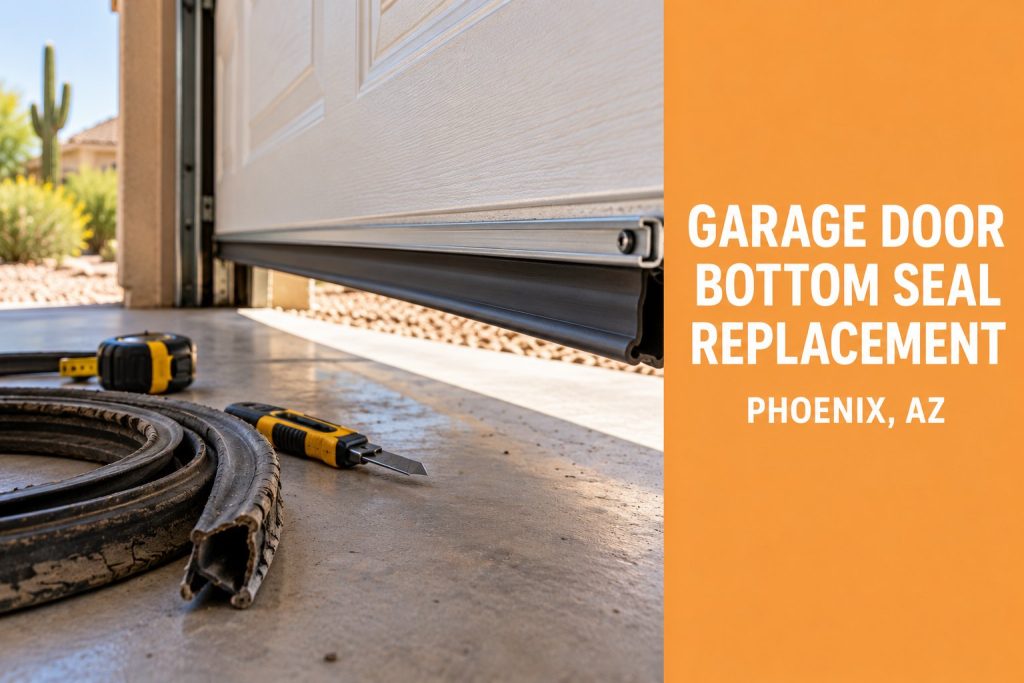
Short answer: If you see daylight under your garage door, find dust or bugs inside, or the rubber at the bottom is cracked, flat or torn, it is time for a garage door bottom seal replacement. A new seal closes the gap, keeps out dust and pests and helps the garage hold a steadier temperature. For a licensed, bonded and insured technician in Phoenix, call (480) 690-3344.
The rubber strip along the bottom of your garage door does more work than it looks. It seals the gap between the door and the floor, blocks dust storms, keeps scorpions and crickets out and stops rain from running in during monsoon season. In Phoenix, months of heat and UV light dry that rubber out until it cracks, shrinks or tears. When that happens, a garage door bottom seal replacement is one of the simplest repairs that makes a garage noticeably cleaner and more comfortable.
This guide explains how the bottom seal works, the signs it needs replacing, which seal types fit Phoenix garages and what to expect when a technician replaces it.
What a Garage Door Bottom Seal Does
The bottom seal, sometimes called the bottom astragal or weather seal, is a flexible strip attached to the lowest panel of the door. When the door closes, the seal presses against the concrete and fills the uneven gaps. A healthy seal:
- Keeps dust, sand and debris out during haboobs and windy days.
- Blocks scorpions, roaches, crickets and other pests.
- Stops monsoon rain and runoff from flowing into the garage.
- Reduces hot and cold drafts, which matters if you work or store items in the garage.
- Cushions the door as it closes, so it lands more quietly.
7 Signs You Need a Garage Door Bottom Seal Replacement
1. You See Daylight Under the Door
Close the door during the day and turn off the garage lights. Any line of light along the floor means air, dust and bugs can get in too.
2. The Rubber Is Cracked or Brittle
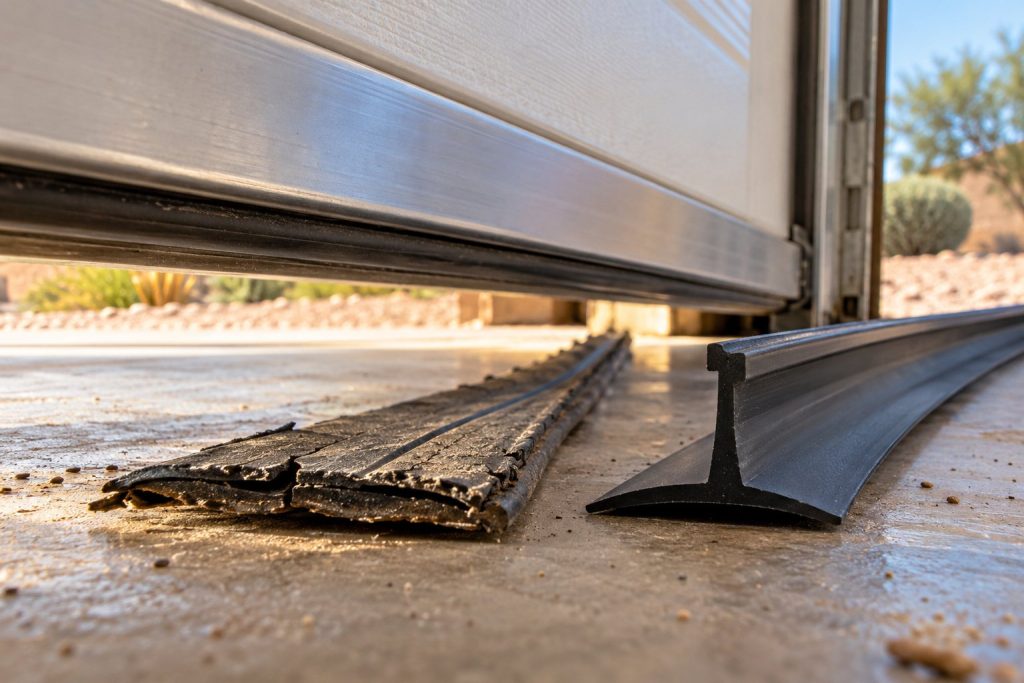
Phoenix sun bakes rubber. If the seal feels hard, has surface cracks or breaks when you bend it, it can no longer flex to fill gaps.
3. The Seal Is Flattened
A seal that has been crushed flat for years does not spring back. It touches the floor but no longer seals the low spots.
4. There Are Tears or Missing Pieces
Pets, rodents and the door’s own weight can tear sections away, often at the corners where pests get in first.
5. You Find More Dust and Bugs Inside
A sudden increase in dust on shelves or more bugs near the door is often the first clue that the seal has failed.
6. Water Gets In During Monsoon Storms
If rain pools inside the door after a storm, the seal or the floor slope needs attention. A new seal is usually the first fix to try.
7. The Door Slams Down Louder Than Before
When the cushion is gone, metal meets concrete. A louder close can mean the seal is worn out.
Types of Garage Door Bottom Seals
The right seal for your garage door bottom seal replacement depends on the retainer on your door and the shape of your floor.
| Seal Type | Best For | Notes |
|---|---|---|
| T-style (single or double) | Most steel doors with a T-track retainer | Slides into the retainer channel |
| Bulb seal | Floors with small dips | Round profile compresses to fill gaps |
| J-type | Doors with a J-channel retainer | Hooks into the retainer |
| Bead seal | Some older doors | Beaded edges lock into the track |
| Threshold seal (floor) | Uneven or sloped floors | Glued to the floor, works with the door seal |
Bring a short piece of your old seal or a photo of the retainer if you plan to buy one yourself. Many seals look alike but only fit one type of track.
How a Garage Door Bottom Seal Replacement Works
- Inspect the door and floor. The technician checks the retainer, the bottom panel and the slab for low spots.
- Raise the door to a safe working height. The door is opened and secured so the bottom is easy to reach.
- Remove the old seal. The worn strip slides out of the retainer. If the retainer is bent or rusted, it is replaced too.
- Clean the channel. Sand and debris in the track keep a new seal from sliding in smoothly.
- Install and trim the new seal. The new strip is fed through the retainer and trimmed with a little extra at each end.
- Test the close. The door is lowered to make sure the seal meets the floor evenly and the door does not reverse.
Can You Do a Garage Door Bottom Seal Replacement Yourself?
Many homeowners can replace a T-style seal with a helper, especially on a light single-car door. It gets harder when the retainer is bent, the door is heavy, or the seal is stuck from years of heat. Never loosen the bottom bracket on the door’s corner: on most doors it holds the lift cables under spring tension and can cause serious injury. If the bottom bracket, cables or springs look worn, stop and call a professional.
Phoenix Heat and Your Garage Door Seal
Garage doors in Phoenix, Tempe and the East Valley face some of the toughest conditions in the country: summer slab temperatures that soften rubber, intense UV that dries it out and fine dust that grinds into the seal every time the door moves. A garage door bottom seal replacement with a UV-resistant vinyl or quality rubber seal holds up better in this climate. Pairing it with fresh side and top weatherstripping, or with an insulated garage door, makes the biggest difference if you use the garage as a workshop, gym or storage for items that do not like heat.
What Not to Do
- Do not use silicone caulk to glue a torn seal back together. It fails early and makes the next repair harder.
- Do not adjust the door’s close limit to force it harder into the floor. That can strain the opener and cause the door to reverse.
- Do not remove the bottom corner brackets.
- Do not ignore water coming in under the door. It can damage stored items and the drywall.
Schedule a Garage Door Bottom Seal Replacement
CallOrange Garage Door Repair is licensed, bonded and insured. We match the right seal to your door, check the retainer and test the close, with a clear quote before we start.
What Affects the Cost of a Garage Door Bottom Seal Replacement
The price of a garage door bottom seal replacement depends on a few simple factors, so we always give a clear quote after looking at the door:
- Door width: a double door needs a longer seal than a single door.
- Seal type: heavy-duty bulb and UV-resistant seals cost more than basic T-style strips.
- Retainer condition: a bent, rusted or missing retainer must be replaced before the new seal can go in.
- Floor condition: an uneven slab may need a threshold seal as well.
In most homes, a garage door bottom seal replacement is one of the most affordable garage door repairs, and it pays off right away in less dust, fewer bugs and a cleaner garage.
Other Repairs to Check at the Same Visit
A garage door bottom seal replacement is a good moment to look at the rest of the door. Worn rollers, frayed cables and an opener that strains can all be checked while the technician is there. If your door is noisy, slow or uneven, ask for a full garage door repair inspection at the same time.
Where We Serve
We handle garage door bottom seal replacement for homes across Phoenix, Tempe, Mesa, Chandler, Gilbert and Scottsdale. Learn more about our residential garage door repair in Phoenix.
Written by the CallOrange Garage Door Repair team
Our licensed, bonded and insured technicians work across Phoenix, Tempe, Mesa, Chandler, Gilbert and Scottsdale every day, and this guide comes from what we see on real calls. Questions about your garage door? Call (480) 690-3344.